How to forecast CAT team staffing needs from storm footprint size
Every CAT lead has run this math on the back of a napkin at 2 a.m.: footprint acres times policies-in-force density times an assumed attachment rate equals bodies needed by Thursday. It's a reasonable starting point. It's also wrong often enough to cost you either overstaffed hotel blocks or an IA pool that's still three waves behind by the time claims stop trickling in and start flooding.
Footprint size tells you where the storm went. It doesn't tell you how hard it hit anything in particular, and staffing lives or dies on that second number.
The napkin math, and where it breaks
The standard approach starts with the National Weather Service polygon or your own wind-field model, overlays it on your book of business, and counts exposures. From there you apply a historical claim frequency for that storm category: call it 8-12% attachment for a moderate straight-line wind event, higher for anything with embedded tornadic activity. Multiply exposures by attachment rate to get expected claim volume. Divide by an average adjuster caseload (commonly 40-60 open files per desk or field adjuster depending on complexity) and you have your headcount target.
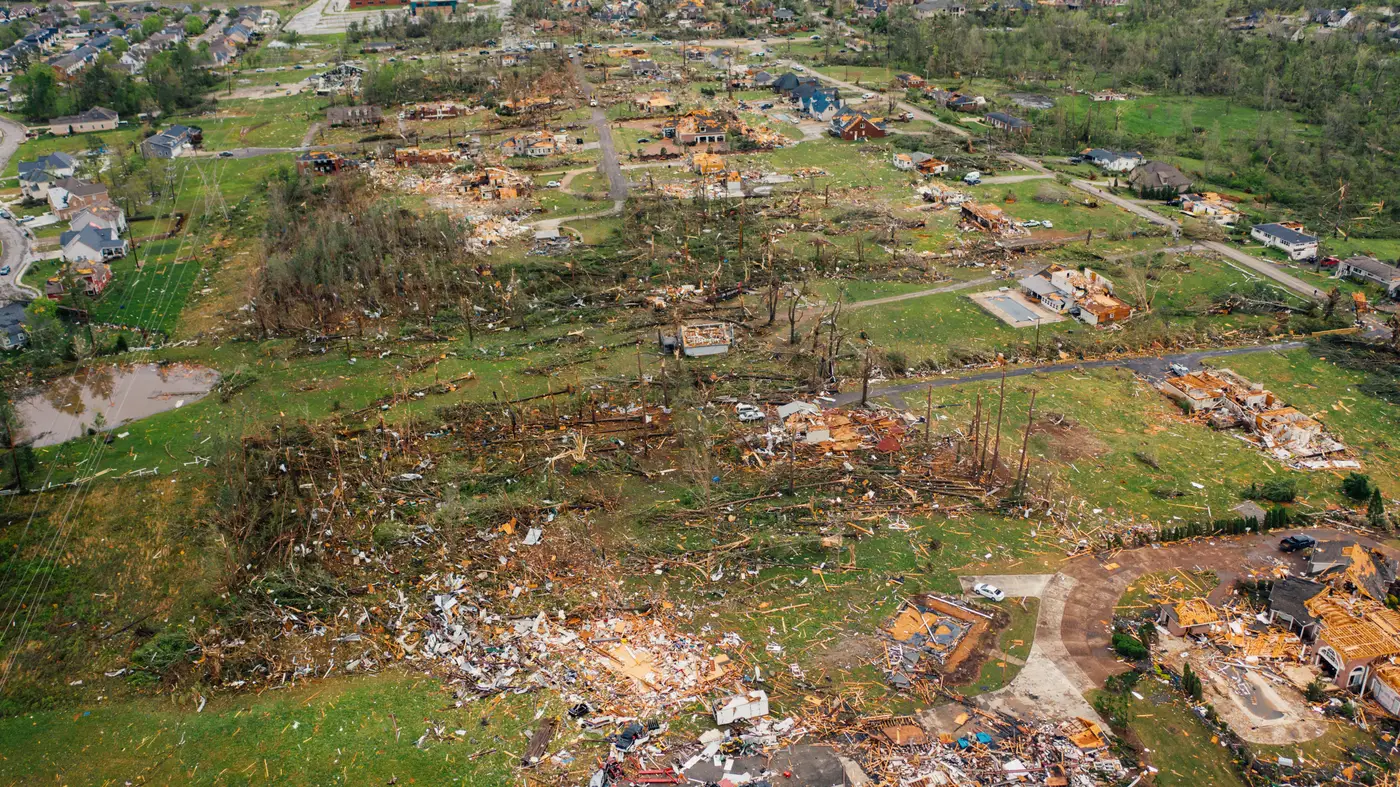
This works fine when damage is roughly even across the footprint, which it almost never is. A 40-mile-wide derecho track and a 40-mile-wide track with three embedded microbursts have the same footprint acreage and wildly different staffing curves. The derecho spreads moderate roof and fence claims evenly, favoring more desk adjusters who can close files fast on photos and self-reported scope. The microburst track produces tight clusters of total losses and structural claims that need senior field adjusters, engineers, and more windshield time per file. Same footprint, different crew mix, different week-one surge call.
Claim volume forecasts built only on footprint and exposure count miss this entirely. They tell you the storm hit 40,000 policies. They don't tell you which 4,000 of those policies are going to eat 60% of your adjuster hours.
Grading the footprint before you staff against it
Staffing has to follow damage severity distribution across the footprint. If you know, within a day or two of landfall, which blocks took roof-level damage and which took structural or total-loss damage, you can split your surge call into the right ratio of senior field adjusters versus desk and virtual-inspection staff instead of guessing from last year's hail event in a different state.
A per-building damage grade closes that gap. You get a graded read of the footprint from very-high-resolution imagery within days of the event, building by building, instead of waiting on drive-by windshield surveys or self-reported photos trickling in over the first two weeks. That lets you set your adjuster headcount against where the severe clusters sit instead of against an even spread assumption, and send your first wave to the worst-hit streets before a single truck reaches the ground. The per-building grading approach behind Windstorm Damage is built for exactly this window, the gap between "the storm passed through here" and "we know how bad it actually was."
A simpler staffing rule of thumb
If you only remember one thing: don't size your CAT team off storm width. Size it off the ratio of severe-to-moderate damage within the footprint, because that ratio drives both your total claim volume forecast and the skill mix you need on day one. A wide, even-damage footprint can often run lean on senior adjusters and heavy on desk staff. A narrow footprint with concentrated severe damage needs the opposite, even if the raw exposure count is lower.
Run your forecast in two passes if you can: one for raw volume off exposures and historical attachment, one for crew mix off damage severity distribution once you have eyes on the footprint. The first tells you how many claims are coming. The second tells you who needs to be in the field to close them.
If you'd rather start that second pass with a graded view of the footprint than a stack of pending drive-by reports, that's the problem Windstorm Damage was built to solve.