What counts as a total loss building in a windstorm claim
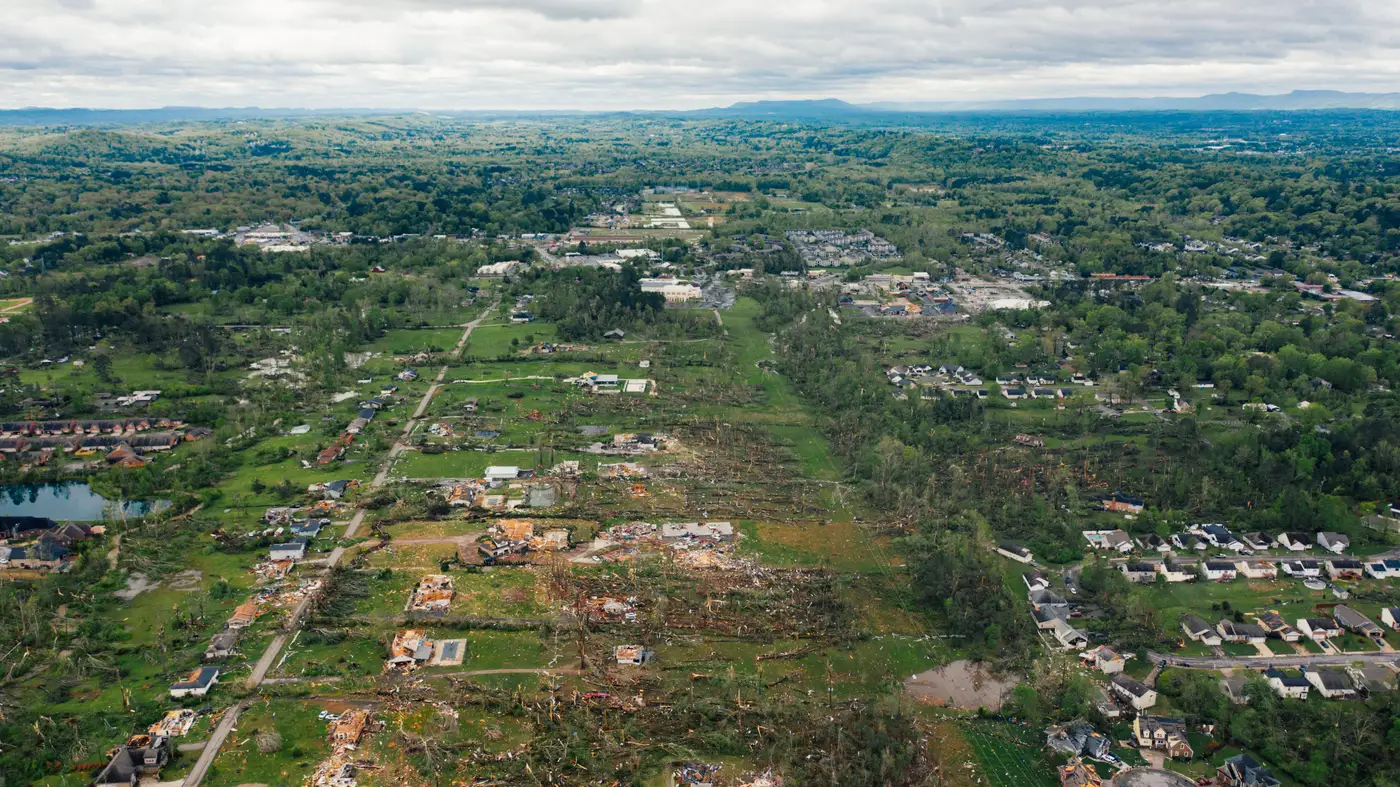
A building doesn't become a "total loss" because it looks bad from the street. It becomes one because of what's underneath the shingles, siding, and drywall, and what it would cost to put back. For a CAT team setting reserves before boots hit the ground, that distinction matters more than almost anything else on the loss run.
Partial loss vs total loss in a wind claim
Partial loss is the default assumption on almost every wind file. Shingles stripped off a slope, a soffit torn loose, a chimney cap gone, a section of fence down. The structure is repairable, the policy pays to fix what wind took, and the building keeps its original bones.
Total loss is a different animal, and it comes in two flavors adjusters use interchangeably but shouldn't:
- Actual total loss. The structure is gone or destroyed beyond any reasonable repair. Roof collapsed into the living space, walls racked off the foundation, a mobile home rolled. Nobody argues about this one.
- Constructive total loss. The building is still standing, maybe even still occupied, but the cost to repair it exceeds what the policy or the state's valued policy law treats as the windstorm claim severity threshold for paying out as a total. This is the one that drives most of the disputes, because two adjusters can walk the same house and land in different places depending on what they count.
The gap between those two categories is where reserve dollars get set wrong, and it's also where most of the back-and-forth with policyholders and public adjusters starts.
What actually tips a structure to total loss in a windstorm
A roof that's lost its covering is a repair. A roof that's lost its deck, or has had wind-driven water sitting in the trusses for three days before anyone gets a tarp on it, starts moving toward total. The things that push a building across that line in a wind event:
- Structural racking or shifting of the frame, not just cosmetic damage to the exterior
- Roof deck failure or truss damage, as opposed to shingle or underlayment loss alone
- Water intrusion that's had time to compromise the structure itself, not just the contents
- Foundation displacement, which is rare in straight-line wind but shows up after tornadic spin-up within a broader windstorm footprint
- Age and condition of the building going into the loss. A 40-year-old roof on a building with deferred maintenance crosses the repair-vs-replace line at a much lower wind speed than a roof five years into its service life
Carriers and state valued-policy statutes handle the cost-threshold side differently, and the percentage of replacement cost that triggers a constructive total varies by policy language and jurisdiction, so there's no single number that applies everywhere. What's consistent across the industry is the logic: once the engineering assessment or repair estimate crosses whatever that policy's threshold is, the file gets reclassified, reserves get adjusted, and the claim moves to a different track, often with its own documentation and sign-off requirements.
Why this classification can't wait for a windshield survey
A CAT team lead already knows the rule for structure total loss windstorm claims. The hard part on day two of a deployment is knowing which of the four hundred addresses in the footprint are candidates for that rule before a single truck is routed to them. Drive-by surveys tell you that eventually, building by building, over however many days it takes a crew to work a damaged subdivision street by street. Self-reported photos from policyholders tell you even less, since a phone photo of a stripped roof section looks identical whether the deck underneath is fine or caved in.
A per-building damage grade pulled from very-high-resolution imagery across the whole footprint doesn't replace the engineering call on constructive total loss. What it does is flag which roofs show the kind of structural disruption, large-area deck exposure, or collapse signatures that make a total-loss review worth prioritizing before an adjuster is on the road. That's the gap Windstorm Damage was built to close, and it's worth a look before your next deployment plan gets built off a windshield survey that hasn't happened yet.